
We're committed to strengthening our communities. See how we're making an impact.

We learn what matters most by asking you one simple question: What would you like the power to do?
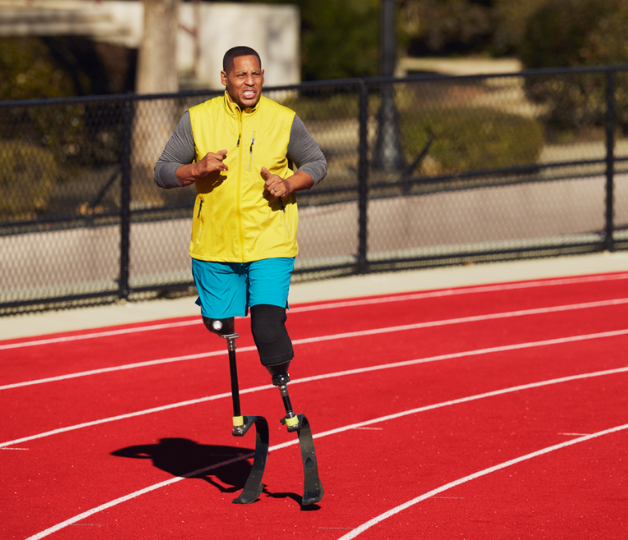
There is no challenge too big
After losing both legs in combat, Cedric knows what it’s like to overcome adversity. And he’ll prove it once again while running the Boston Marathon for Achilles International.

Driving each other to greatness
We're proud to be a presenting partner of the Augusta National Women's Amateur and celebrate the elite athletes who elevate the sport and one another.
Being a great place to work has its rewards. And awards. *

Taking action for our communities, clients and teammates

No matter what your financial goals are, we’re here to help

Thousands of runners who raced for more than time
Bank of America was proud to present the 128th Boston Marathon®. Join us in continuing to support the participants who ran to raise funds for their cause. Donations accepted through May 15th.
Q1 2024 Financial Results
Bank of America reports financial results for the first quarter of 2024
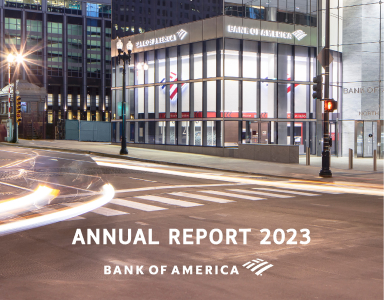
2023 Bank of America Annual Report
See how our commitment to Responsible Growth has continued to fuel our company’s success.
showing element 1 of 3
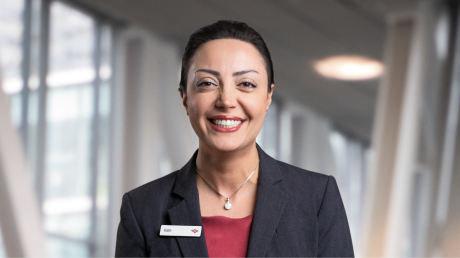
“I love what I do. I see myself as a professional helper.”
Kate A., Relationship Banker

Going above & beyond for our teammates
We’re #1 in our industry and #1 for workers on the JUST Capital’s 2024 Rankings of America’s Most JUST Companies. **

Helping millions of people achieve their financial goals
For two years in a row, J.D. Power has certified Bank of America for Outstanding Customer Satisfaction with Financial Health Support – Banking & Payments. ***
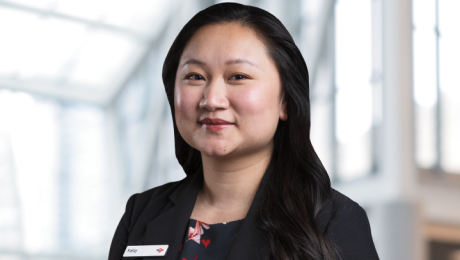
“It’s all about listening, asking what’s important, and offering the right solutions.”
Kathy G., Senior Banker

Delivering on our clients’ ever-changing needs
Euromoney Magazine has named Bank of America the world's best bank for diversity and inclusion 2023.

Pursuing and enabling the dreams of entrepreneurs
Entrepreneurs enhance the character of cities and towns across our country. Take the founder behind Isla Veterinary Boutique Hospital. Dr. Josh Sanabria started his own veterinary hospital in Dallas, Texas – and we've supported his endeavors from day one.
Owner Josh is just one of the three million small business owners that we work with every year, helping them realize their potential.

Valuing all of our differences
At Bank of America, we’re committed to cultivating a diverse and inclusive workplace and focusing on partnerships that drive change and address critical challenges facing our communities. Creating an inclusive environment starts at the top and extends to all of our company. Our Board, its committees and our CEO play a key role in the oversight of our culture, holding management accountable for ethical and professional conduct and a commitment to being a diverse and inclusive workplace.
Hero image: Natalie J., Financial Center Market Manager
* The Stevie Awards recognize the achievements of businesses and professionals worldwide. Organizations self-nominate, providing data for various categories, and winners are determined by the average scores of more than 240 professionals worldwide serving as judges.
** For the annual Rankings, JUST Capital collects and analyzes corporate data to evaluate the 1,000 largest public U.S. companies across 20 Issues identified through comprehensive, ongoing public opinion research on Americans’ attitudes toward responsible corporate behavior. In determining the top 10 companies for workers, JUST Capital used its Workers Leaders Index which tracks the top 20% of companies in its annual Rankings that perform the best across the five worker related issues evaluated. https://justcapital.com
*** J.D. Power 2023 Financial Health Support Certification SM is based on exceeding customer experience benchmarks using client surveys and a best practices verification. For more information, visit www.jdpower.com/awards